
agape
“There are years that ask questions and years that answer.” - Zora Neale Hurston

It was Christmas Eve and I was blustering in the kitchen, the place where the women in my family huddle to tell the truth about ourselves. On and on, I cursed and scratched and spat about the thing at hand while my mother chopped vegetables and listened.
“And have you ever known me not to win?” I scoff conclusively, feeling quite dramatic and self-possessed.
“I’ve never known you not to fight,” she responds flatly, without looking up from her knife.
A swift defeat. My mother has never skipped an opportunity to deflate an ego, even when said ego was her heartbroken daughter’s. She looks up and to soften her blow, adds with a wink, “And Lord help your opponent.” I’m appeased but her intent to turn me inward has succeeded.
The year was on its last leg and we were both happy to let it slip away. Time has moved differently for every year I’ve lived. The rhythmic changes, percussion added and then stripped. Some years have flown by indifferently and others have trudged under enormous weight. There is no telling how it will be in the new one, though there is hope. I’ve watched my mother endure her own time with steel-toed practicality, intolerant of rabble and dismissive of over-sentimentality. She gets on with things, a trait I seem to have dodged in the genetic scramble.
At my age, she was getting married, building me in her belly, and holding up the sky of her father’s terminal illness. My arrival came mere months before my grandfather’s departure, birth and death brushing against each other in the hallway. If 26 is our year of being forged in the fire of adversity, I concede bent-kneed to her and give thanks for the mercy I was showed. What is a little heartbreak compared to life’s bookends?
Still, this year was sink or swim. Taking it on the chin and refusing to break. The threshold between youth-driven dreams and the cold concrete made known. For nearly all of it, I felt like I was in a fight that I was losing. Glass shattered, flesh torn, heart broken. It’s really only in the December retrospective that I can spot the growth. A new notch on the doorframe. It’s only now, in my audit of the murky months, that I can recognize a blanket of acceptance spread across me that didn’t used to be there.
What does it mean to fight something like a year? Before me, there appeared various paths. Some promised redemption, others retribution, still more sang of salvation but smelled like rotting fish. This was where the real fight laid. The choices you make in the wake of loss, humiliation, and disillusionment—they announce the caliber of your strength whether you want it publicized or not. It is human to want to prevent further harm. It’s also human to want to hurt what hurts you. There were hot nights where the temptation nearly overtook me. One event had placed me on the razor thin balance of slow ascension or quick collapse.
I walked with madness and slept with grief. I let my mind twist wickedly and then I let the gentle fingers of the people who loved me undo the knots. When I returned home, glass-eyed and catatonic from the bitter and abrupt ending, my mother assumed the side of the bed that was suddenly missing a body and stroked my back until sleep relieved my cries. When I was sinking into the quicksand of self-pity, my sisters gave me their daily stories of high school and second grade teaching to remind me that there was life outside of this body. Aunts, cousins, family friends, mothers of my friends all stood from their metaphorical seats and offered them to me, as well as hard-earned wisdom from their own tragedies. And my friends; my beloved, sacred, impossibly patient friends. The only salvation I’ll ever need lies in their fierce love. Month after month, even when I didn’t deserve it, they knocked softly on my door and, on the days I did not answer, slipped a note under it that read: we are here.
It was enough to come up for air. The air turned warm and though my body clung to the dead winter’s chill, it was enough to pick myself up and go. Know where to bleed when the night comes to blows. For me, aftermaths are for New York City. When I arrived, everything became frenetic and fragmented and strange. It was gloriously free and that itself horrified me. Time and time again, this is the place to which I flee, seek refuge after the storm. The refreshing indifference, the embracing energy, the impatience, the many offerings of splendor and danger and connection. The city brought me to my feet quickly and without much sympathy. I dusted off the dirt and began the difficult task of stitching my wounds. I was never lonelier, but I learned more about love than I ever could have while I was in love.
What I realize now is that I actually didn’t know much about love at all until this year, the year I was left. What I’m talking about is real love, love that is independent from and unaffected by the love you receive in return. There is no return. Real love needs no reciprocation. This is where so many people fall off. Someone can leave you, humiliate you, betray you, discard you, decide you are a hopeless case. And these things are undoubtedly painful and undoubtedly damaging. But what I have learned since being left—and this I say with both relief and awe—is that a certain kind of love can subsist on nothing. It can be thrown out into the cold street, starved, emaciated, and it will not die. I had no idea that kind of love existed, let alone that I would be capable of it.
It is the love for a person’s very substance, right down to their cells. You love who they are, every morsel of their inclinations and reverberations and modes of being. You love them for their victories, some you witnessed and some you remain ignorant to, and you love them—yes, you love them—for their losses, their failures, and their darkness. This includes loving their choice to leave you, to hurt you. Because this choice was conjured, considered, and acted upon by a human heart and mind with no greater knowledge of this life than you have. It was done, you must believe, out of some necessity that you may not understand now or ever. It was an act that sent you both reeling into a new cosmos in which it is now your responsibility to make a home.
It’s the kind of love that comes even before pride, before preservation, before survival. It’s the essence, close as I’ve come anyways, of being willing to die for someone. Many mistake this for a lack of dignity or a decay of self-respect. How can you betray yourself by loving someone who could not love you half as well?
I have learned that dignity and real love live quite well together. You only lose dignity when you insist that your love needs a response. You lose dignity when you beg for the love of a person who has nothing to offer you. Believe people when they say they have nothing to offer you. There is so much dignity in loving and letting go. The line is as thin as a needle’s point, but to walk it is to inch closer to God.
That’s another thing—loving and letting go. I’ve learned that these are complimentary actions. The old adage “if you love something, let them go” remains relevant for a reason. If someone must leave you, then they must. It’s not up to you. You can’t redraw their destiny just because you love them. They are on a journey as difficult and complicated as your own. They made the choices they made because, with what they knew and what they didn’t know, they had to.
We can say we resent their choices and we can say that we would’ve done things differently. Maybe that’s true. But time is wasted wishing they had been better, more like you perhaps, someone who could envision a future where you were happy together. Time is wasted wishing they had chosen differently. They didn’t choose differently and for that you must love them. They made the brave first step into unknown terrain which allowed you to do the same. They opened the door to a new world and they opened your heart to a new way of loving, the real kind, the kind that exists regardless of their presence and regardless of their absence.
The question is not “did they love me?”
The question is “did I love?”
And if the answer is a painful and resounding “yes,” you have unlocked a dimension of being alive, a full-bodied aliveness that people search their whole lives for.
You’ve gained access to the torment of poets and the inspiration of musicians. It’s true, I spent a lot of this year worried that I had just wasted the last four years of my life because they didn’t result in vows and rocking chairs. I fought myself over my feelings, desperate to convince myself that I didn’t care, or worse, that I could hate. It was no use. The years I spent loving knocked me out of every round. I thought all things needed to end with a bang, when really they can actually just end. If you have spent time loving, you have wasted nothing.
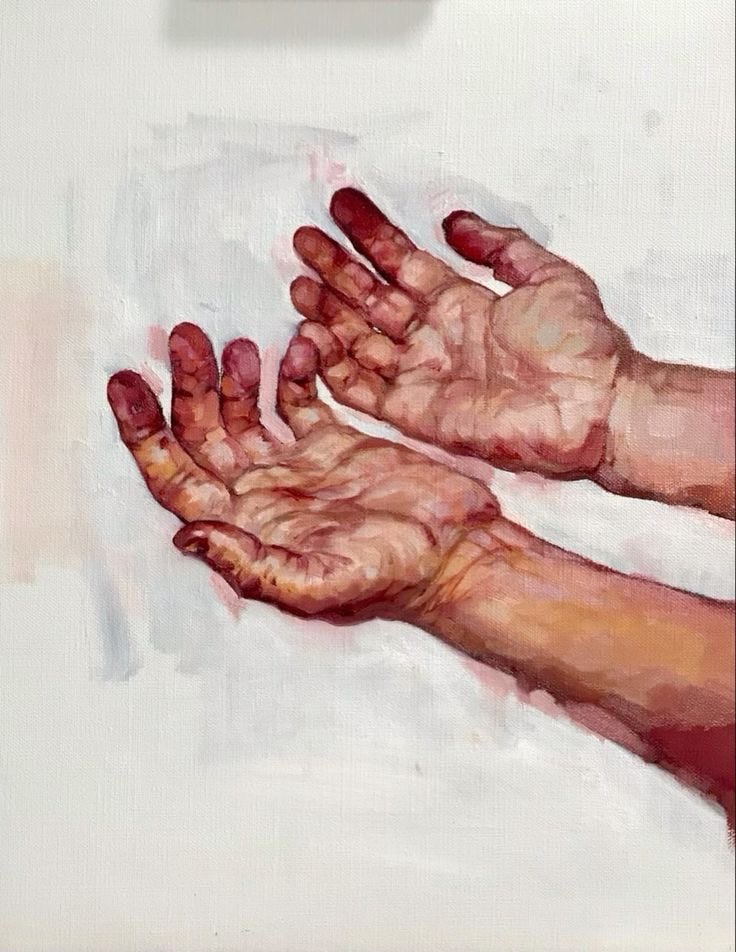
I don’t have the constitution for New Year’s resolutions, their structure doesn’t suit me. But if I’m bringing anything into the new year, it is to stop fighting. No amount of fight will stop the sun from setting. There is no lasso long enough to reach and the entire earth would get knocked off its axis anyways. But even in the darkness of night, I know the sun is out there, shining on the other side of the world, and that brings me great comfort and even some joy. Instead of fighting against time, against all the inevitability it promises, I will try, for once, to enjoy it. Time, an outstretched hand attached to a body shrouded in mist. My indomitable opponent to whom I surrender.
![POEM] The More Loving One by W. H. Auden : r/Poetry](https://substackcdn.com/image/fetch/$s_!IUt6!,f_auto,q_auto:good,fl_progressive:steep/https%3A%2F%2Fsubstack-post-media.s3.amazonaws.com%2Fpublic%2Fimages%2F934894ae-f00c-4263-a062-118af8a79f4e_522x663.png "POEM] The More Loving One by W. H. Auden : r/Poetry")